Bardenas Reales
Navarre has beaches, forests and mountains. It also has a desert.
The A-15 drops south from Pamplona and the landscape says it all: the greens of the basin fade, the trees thin out, the earth turns paler. An hour and a quarter from Ttipiaenea, the road ends at Arguedas and from there you already see it: a horizon of white clay, eroded rock and an immense sky unlike anything you have seen before in Spain.
The Bardenas don't announce themselves with billboards. They appear on their own, all at once, when the car crosses the park gate and the asphalt ends. From there on, dust, silence and a landscape that wind and rain have taken millions of years to carve.
The most extraordinary place in Western Europe
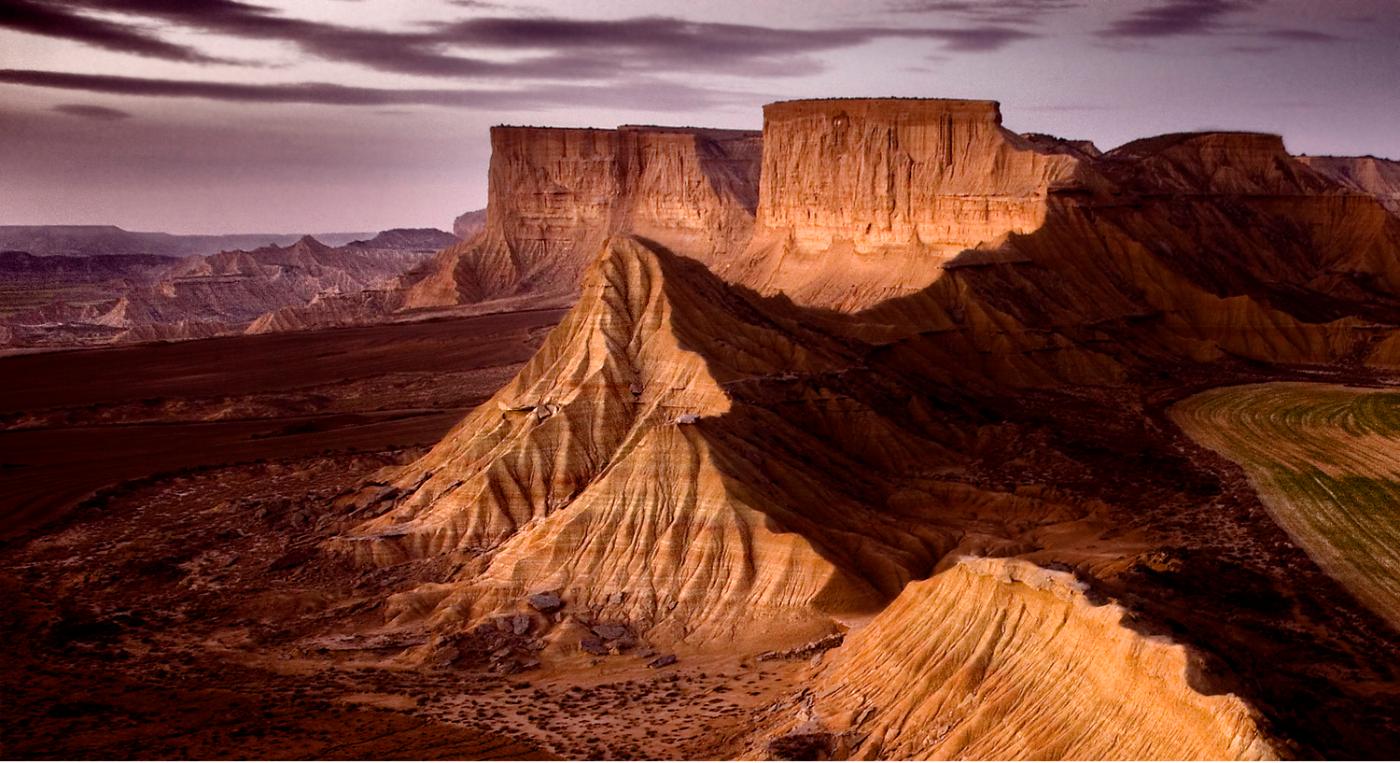
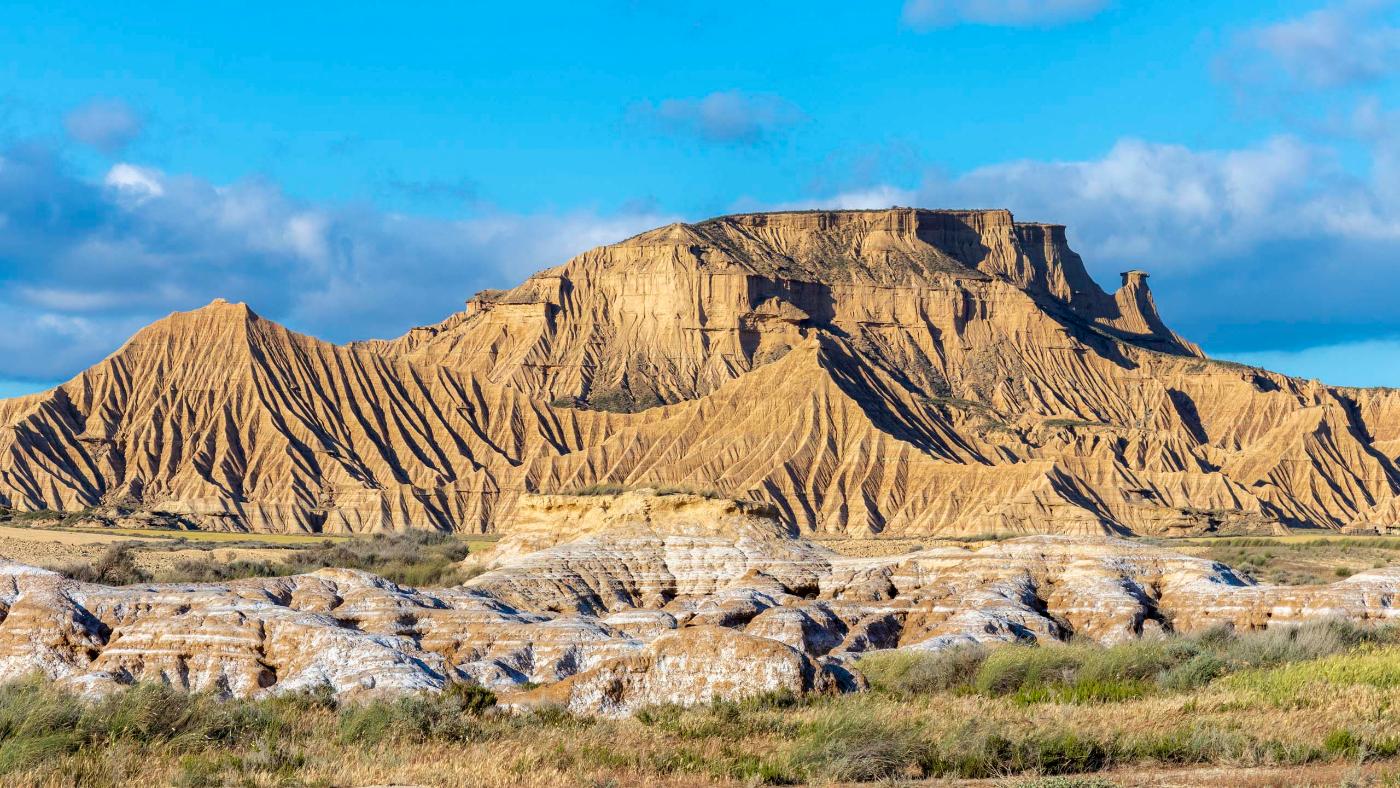
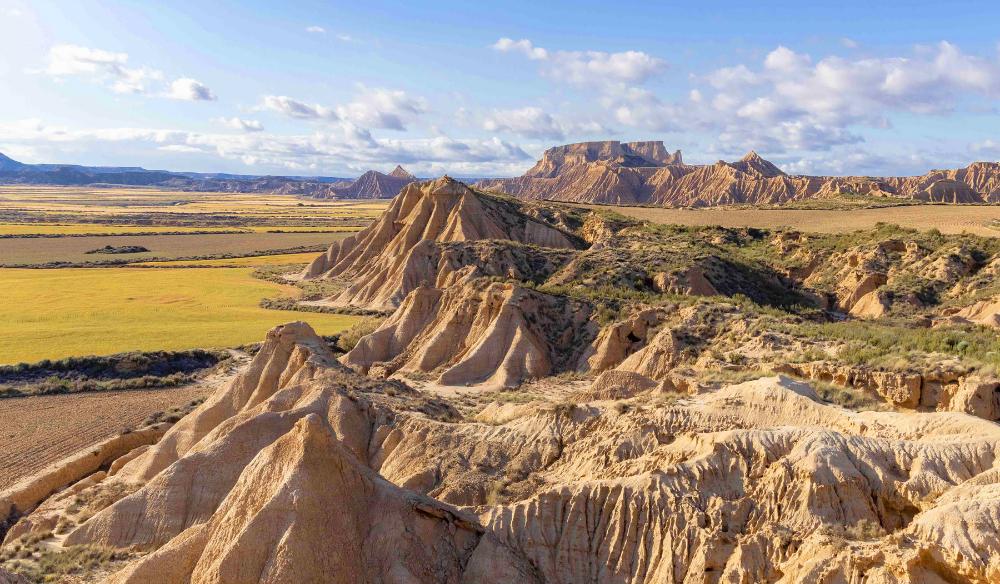
The Bardenas Reales are a 42,000-hectare semi-desert in southern Navarre: canyons of white clay, plateaus with vertical edges, reddish gullies and eroded formations that look straight out of an American Western. It's no metaphor: the Bardenas landscape has appeared in dozens of shoots, from car commercials to TV series.
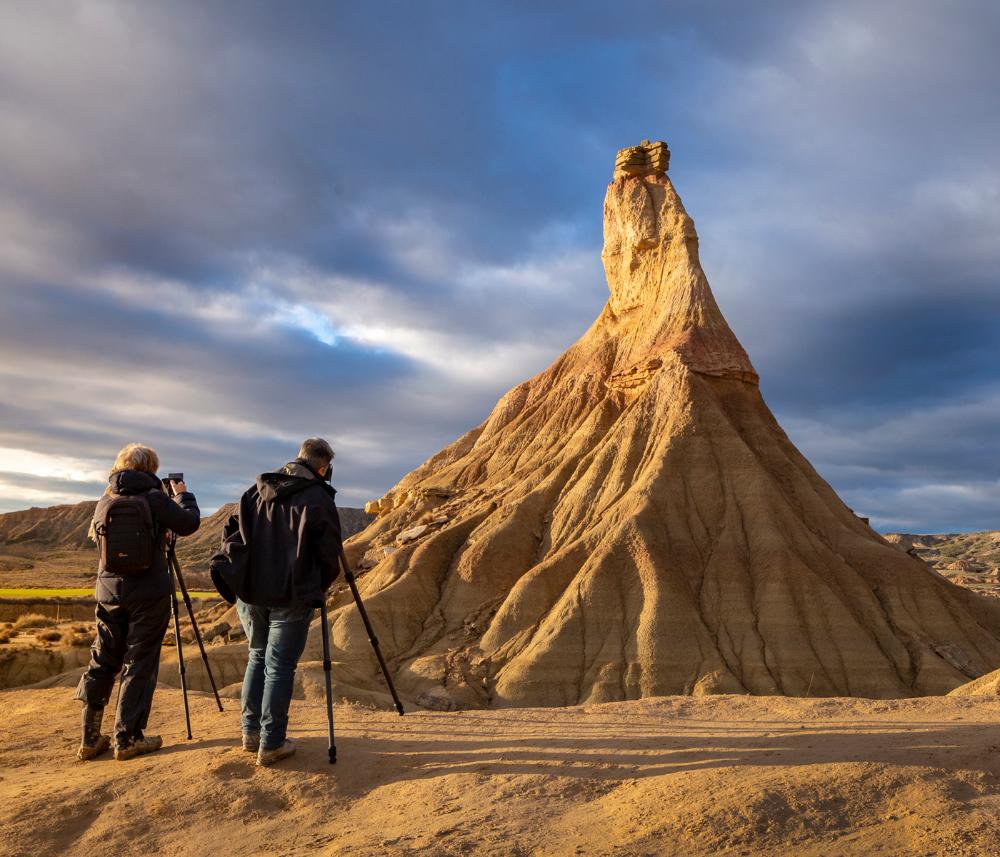
The park's symbol is the Castildetierra butte: a needle of clay and rock crowned by a cap of hard stone that the rain has not managed to dissolve. Erosion worked for centuries to carve it and keeps working: in a few thousand years, Castildetierra will be gone. Today it's still there, alone in the middle of the plain, and the photo you take of it from the viewpoint is one of those that ends up in the trip album.
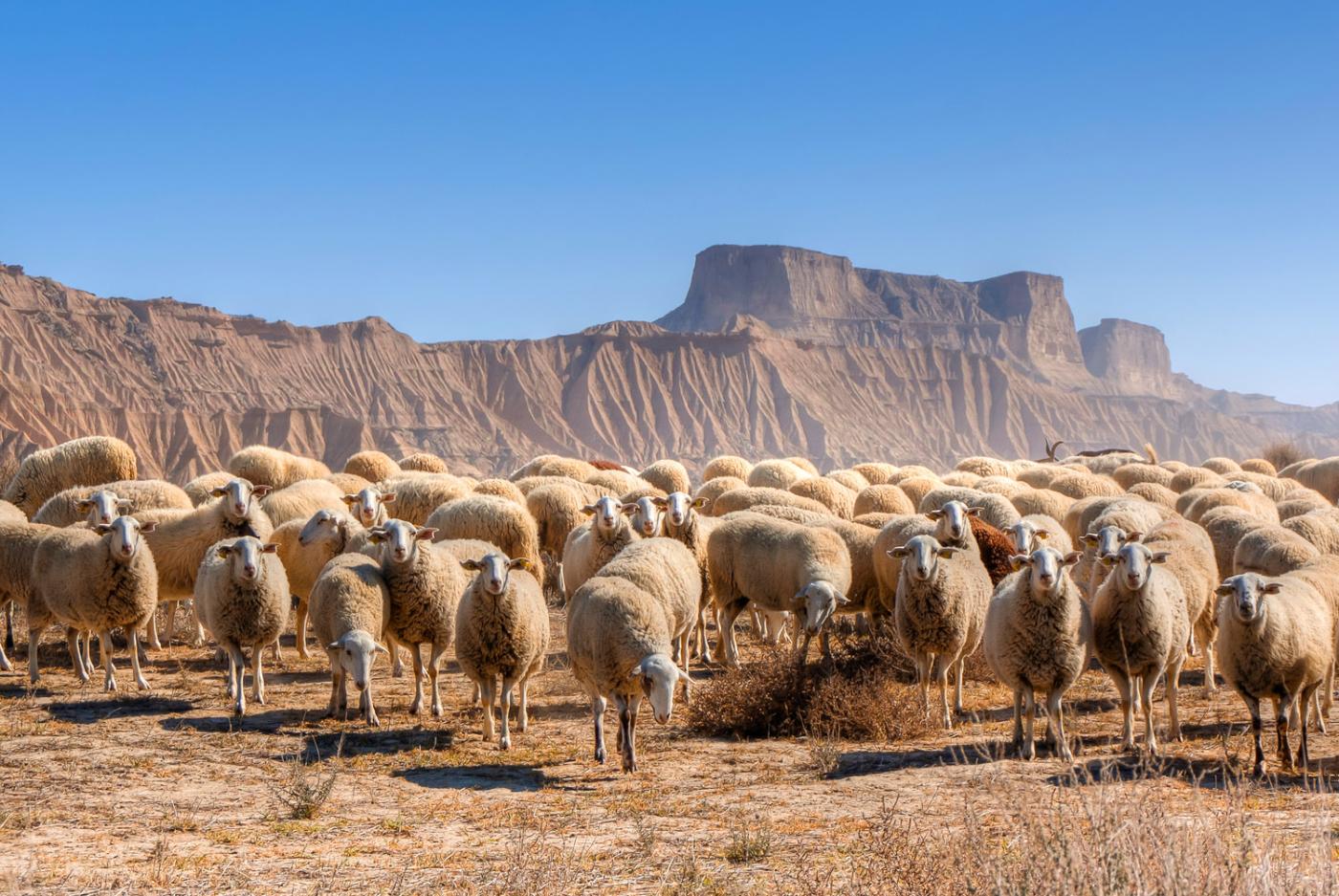
A UNESCO Biosphere Reserve since the year 2000. In the Bárdena Blanca —the most visited area— flocks of sheep still cross along the Cañada Real every year, as they have for centuries, and with a bit of luck you'll meet them on the way.
The park that changes with the hour of the day
The Bardenas are a different park depending on when you visit. Early in the morning, the raking light tints the clay orange and the shadows of the buttes stretch over the white ground. At midday, the sun flattens the landscape and makes the salt of the earth shine. At dusk, the snow-capped Moncayo appears on the horizon and the sky fills with colours that last exactly the right amount of time.
If you can stay until night —and based at Ttipiaenea you can do so without sacrificing your bed— the Bardenas have one of the darkest skies on the Peninsula. The Milky Way is visible to the naked eye on moonless nights. It's the kind of show that makes people stop talking and stay with their necks craned upwards, saying nothing for a while.
Rest at Ttipiaenea Landetxea
The Bardenas leave a strange feeling as you leave: that of having been somewhere that doesn't quite belong to the everyday world. The colours you see for hours —white, ochre, terracotta, grey— follow you in the car on the way back and take a while to fade.
In an hour and a quarter you're at Ttipiaenea. The house has another value after a day in the desert: the green kitchen, the garden, the sound of the river Arakil in the background. The hot shower. Dinner. The fireplace lit while outside the Navarrese night cools down. Some days call for exactly that as an ending.
How to get there from Ttipiaenea
- Distance106 km · 1 h 20 min on the A-15 to Arguedas
- Park entry~€3 per vehicle · Free for pedestrians and cyclists
- Main routeBárdena Blanca · A 40 km driving circuit on dirt track
- CastildetierraViewpoint 8 km from the entrance · A must-see
- Best seasonSpring and autumn · Summer is very hot (>40 °C)
- With childrenYes · The lunar landscape fascinates them · Bring water and sun protection
- For MTBTtipiaenea's e-bikes are ideal for the park's tracks