
Foz de Lumbier
The trail that was once a railway, the river that takes centuries to carve its way through
You set off from Ttipiaenea with breakfast done and your boots in the boot. The road crosses the Pamplona basin, passes through Tafalla and starts to change: the fields wrinkle up, the ravines grow deeper, and in forty minutes you reach Lumbier knowing the landscape ahead is unlike anything you've seen before.
The Foz de Lumbier doesn't announce itself. You park, cross a wooden gate and suddenly you're at the bottom of a canyon: hundred-metre rock walls on either side, the river Irati running clean and cold at your feet, and the vultures —always the vultures— gliding effortlessly above it all.
You walk on the railway tracks
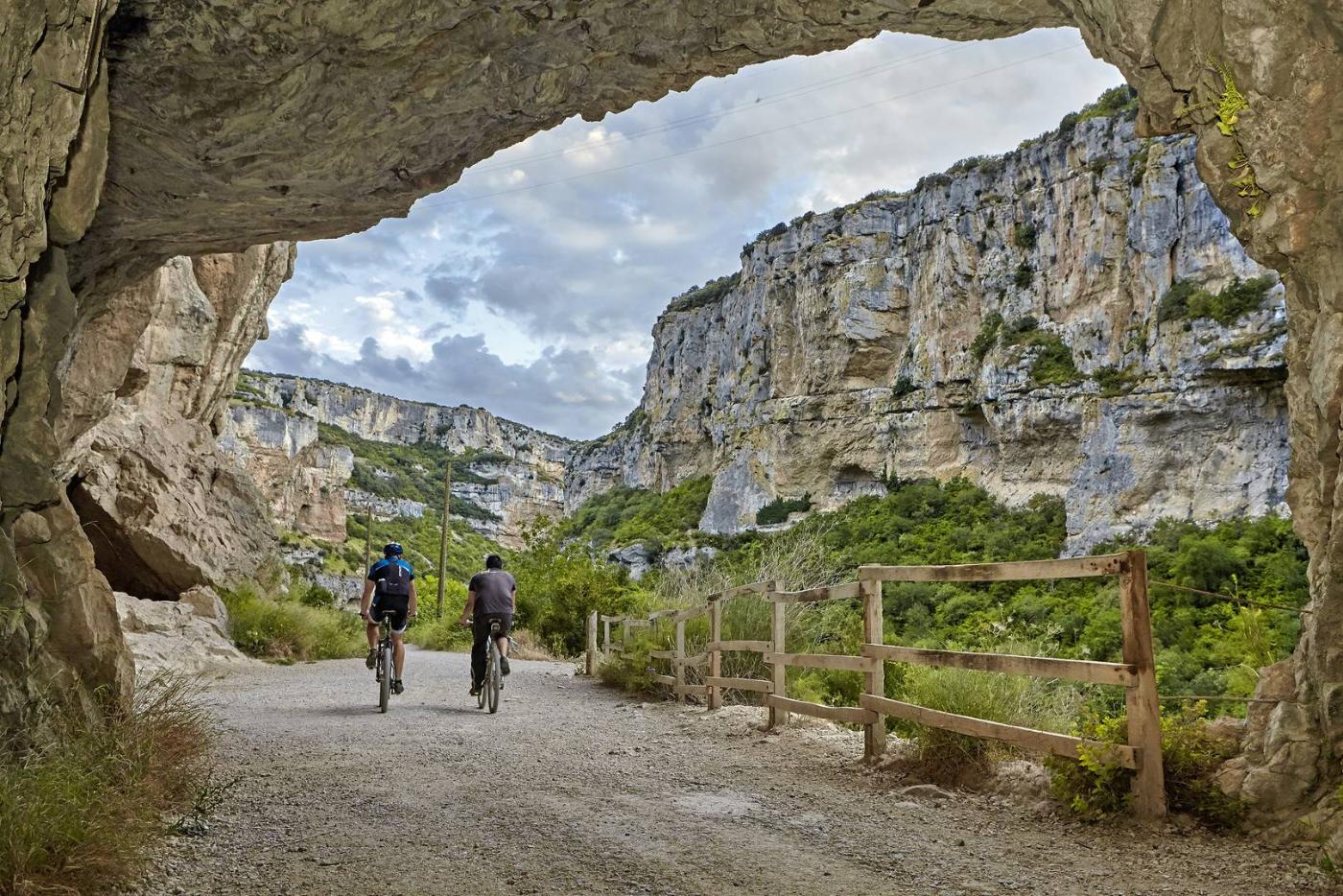
What today is a packed-earth path was, between 1911 and 1955, the line of the Irati Train: a narrow-gauge steam locomotive that crossed the canyon loaded with timber from the Irati Forest to Pamplona. Forty years of industrial history hidden inside a landscape that looks untouched since forever.
The train is gone, but the route remained. The trail enters the gorge where the locomotive once did, crosses the two tunnels the company bored through the limestone —dark, cool, with that smell of damp stone that places never reached by the sun have— and comes out at the far end of the canyon with the river on your right and the vertical walls so close you can almost touch them with your arms outstretched.
It's two kilometres each way. Most people walk there and back at an easy pace in an hour and a half, stopping to look up every time a vulture passes close enough to hear the air between its feathers.
The Foz de Arbayún and the lords of the air
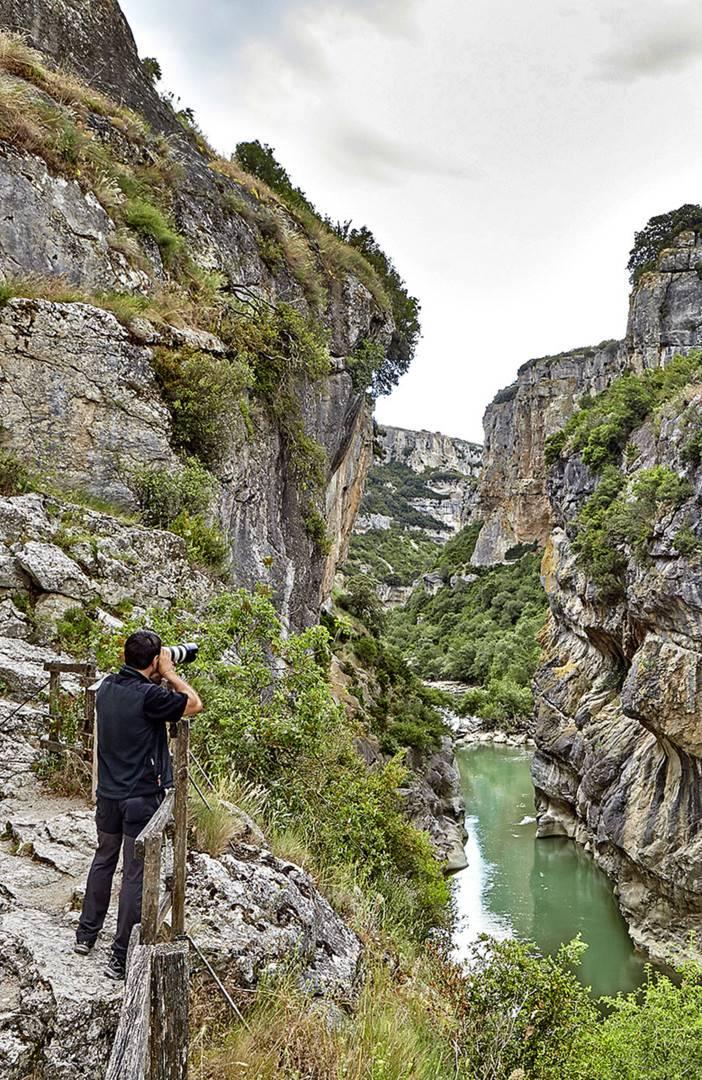
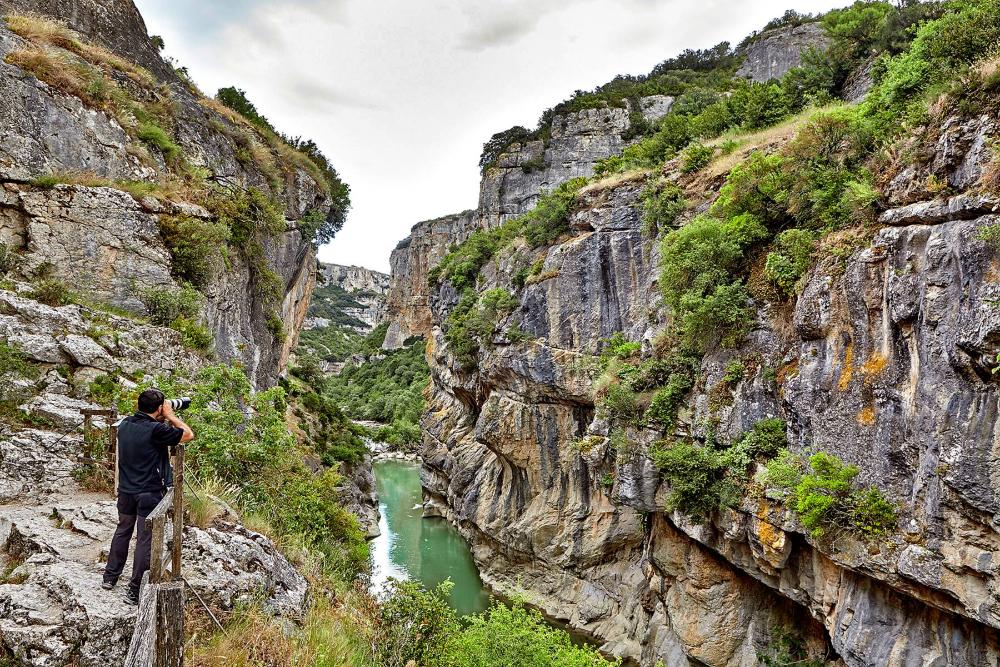
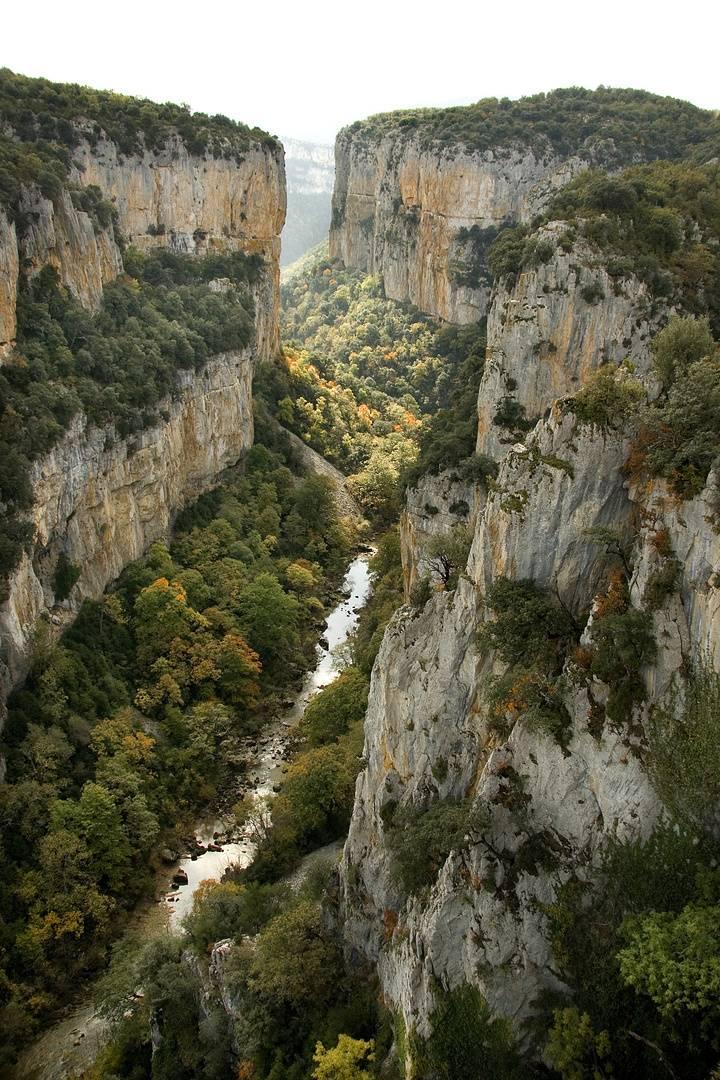
Twenty minutes away by car, the river Salazar has done to the rock the same as the Irati: carved its way through it over millions of years until it left a canyon that makes you dizzy to look down into. The Foz de Arbayún isn't walked from inside: it's taken in from the viewpoints on the rim, with griffon vultures flying at eye level.
Arbayún is home to the largest colony of griffon vultures in Navarre: over four hundred pairs nest in the canyon's vertical walls. If you go first thing in the morning, you see them take off one by one as the sun warms the rock and the thermals begin to rise. It's the kind of spectacle that needs no explanation or guide: you set your eyes on the sky and that's it.
Back with river sand in your boots
The return to reality is gentle. You leave the canyon with that silence great places leave behind, the children argue over which tunnel was darker, and someone suggests stopping in Lumbier for a bite before heading back.
Ttipiaenea is forty minutes away. The afternoon at the house has a different texture after a day like this: the fireplace, the slow dinner, and the feeling that the day gave far more than it seemed to when you set off in the morning.
How to get there from Ttipiaenea
- Distance40 km · 38 min by car
- RouteNA-150 → AP-15 → Lumbier exit
- Foz de Lumbier2 km flat, there and back · 1–1.5 h
- Foz de ArbayúnViewpoint 20 min from Lumbier via NA-178
- DifficultyVery low · Suitable for prams and wheelchairs
- With childrenYes, ideal; the tunnels are the highlight